When to Rebrand Before Your Series A: The Practical Guide



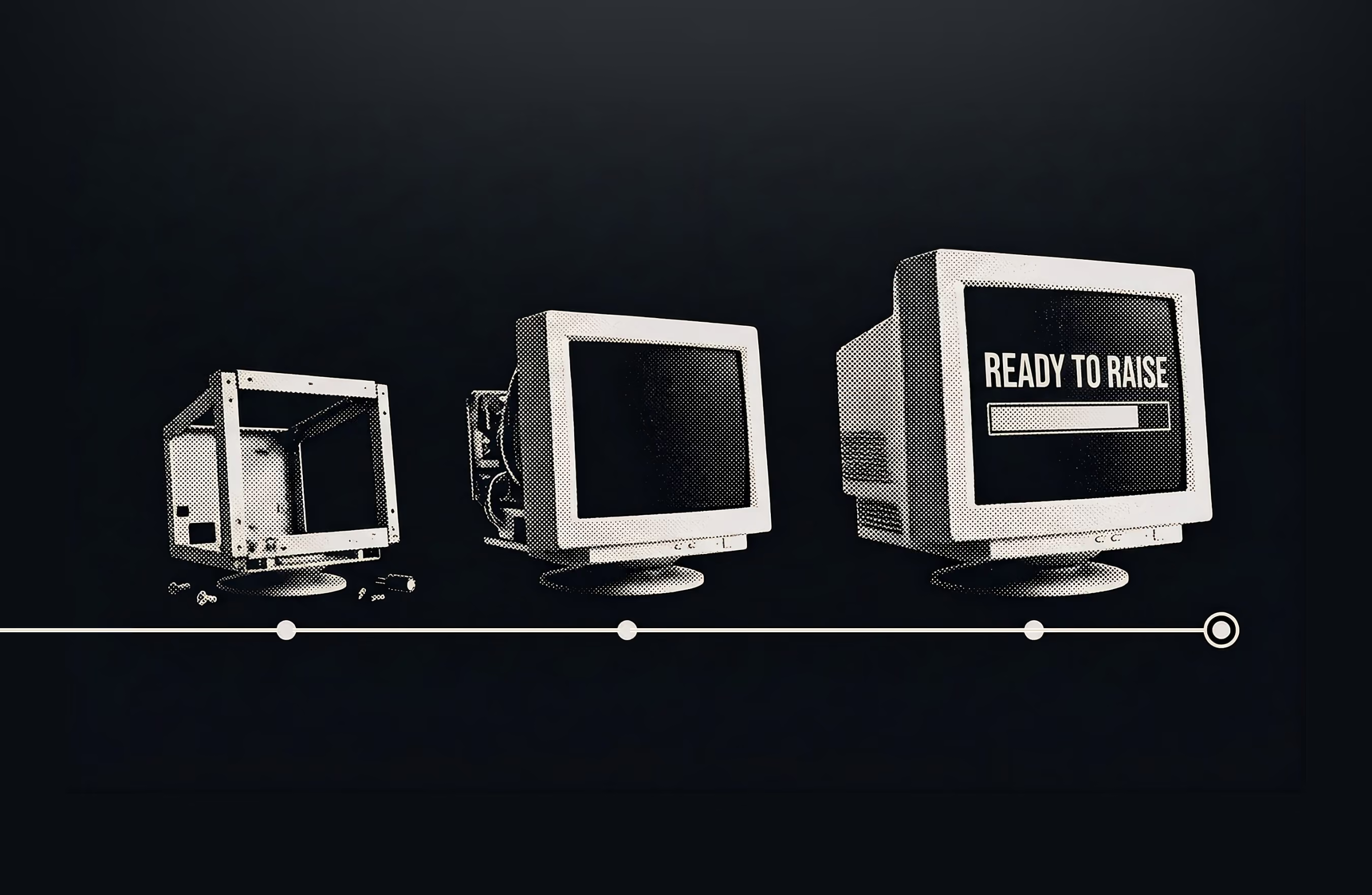
Should you rebrand before your Series A, and if so, when?
The short answer: start about four months before you open the round, and only do it if your problem is clarity rather than taste. A rebrand that fixes how clearly you explain the company is worth the money and the disruption. A rebrand that updates the surface without resolving the story is still worth doing, just not on a fundraising deadline.
Most founders ask the wrong version of this question. They ask whether the brand is good enough. The better question is whether an investor can understand what the company does, who it's for, and why it wins, inside a two minute scan. If the answer's no, that's a clarity problem, and clarity problems get expensive during a raise.
The timing math most founders get wrong
A Series A isn't a moment. It's a season. A priced venture round typically runs 3 to 6 months from first meeting to close, with active fundraising accounting for 8 to 16 weeks of that before you reach a term sheet.
That changes how you should think about the website. Your site isn't being evaluated on one afternoon. It's under investor eyes for the length of the raise, across first meetings, follow-ons, and partner conversations you never see happening.
So there are three windows to rebrand, and only one of them is good.
Well before the round opens. You've got room to get the messaging right, test it with customers, and launch while nothing's on the line. This is the window you want.
During the raise. The worst option, and worse than most founders assume. People picture a rough week. On the timelines above, it's three to six months of your deck saying one thing and your site saying another, in front of every investor who looks. Partners forward links to each other. Associates pull pages into internal memos. Every inconsistency is a small question mark, and question marks compound.
Honestly, this is the call we get most often, and it's the one where we're most likely to tell someone to wait.
After the round closes. Perfectly fine, and often smarter. You've got budget, a clearer view of the next eighteen months, and no deadline pressure. If you're less than three months from opening, this is almost always the right call.
The mistake is starting late and landing in the middle window by accident. Brand and website work expands. Plan for that.
You probably have more runway than you think
Founders treat this as a scramble. The data says otherwise.
Carta puts the median gap from seed close to Series A close at roughly two years, with SaaS companies moving modestly faster than the all-sector median. And the gap has been stretching. Analysis of Carta cohort data found that by Q3 2025, 39% of companies raising a Series A took three or more years from seed, up from 19% in 2019.
So the typical B2B SaaS company has two years or more between rounds, and a growing share have three. Four months of brand and website work is a rounding error inside that.
Available time is almost never the real problem. The real problem is that founders start thinking about the brand at month twenty, when the round is already the next thing on the calendar. If you're reading this and your round is eighteen months out, that's not too early. That's the whole point.
What investors actually do with your website
Worth being precise here, because our industry tends to oversell this.
There's no credible study measuring how long an investor spends on a startup's website. Anyone quoting you a number is guessing. What published VC process guides do consistently show is what happens before a first meeting: investors run a fast screen on thesis fit, eliminating most opportunities in minutes on stage, sector, geography, and check size alone. What survives gets a light review of a small set of artifacts. Usually the deck, the website, and founder LinkedIn profiles.
The important part is what the site gets used for. Nobody's visiting to be impressed. They're validating the story in the deck and looking for red flags. Affinity's due diligence checklist names the ones that show up at screening: an incoherent narrative, a business model that doesn't fit, obvious issues visible on the website or in public records. Add the practical ones every founder has heard secondhand: no clear product, no visible customers, a site that contradicts what you said on the call.
That's a narrower job than most agencies imply. An investor at the screening stage isn't running a design critique, they're checking whether the story holds. Craft is doing its real work later, when a buyer lands on the site and decides whether you look like a company they can hand a seven-figure contract to. At the screen, what gets a company quietly deprioritized is a site that leaves the reader unsure what it sells.
Which is why clarity comes first in this window. Not instead of craft, before it. A beautifully made site that leaves an investor unsure what you sell has wasted its craft on an unresolved story. Get the story right and the craft has something worth amplifying.
Three signals you should rebrand before the round
1. Nobody can repeat what you do after hearing it once.
Run this test. Explain the company to someone outside your category, then ask them to explain it back a day later. If they can't, your investors won't either. And this isn't something the visual system can solve, because it isn't a visual problem. It's a messaging problem that gets misdiagnosed as a design one.
2. Your website was built for a company you no longer are.
Most seed-stage sites get built fast, for a narrower product and a smaller customer. If you've moved upmarket, added a second product, or shifted from self-serve to sales-led, the site is now actively arguing against your story. That gap is exactly the kind of inconsistency a pre-meeting screen is looking for.
3. You're about to change what you sell or who you sell to.
If the raise is funding a real strategic shift, do the brand work first. Sixfold came to us with no brand identity at all, ahead of a round that would take them into a more scrutinized enterprise conversation. Building the identity before the raise meant the company they were pitching and the company they looked like were the same thing. They went on to raise a $15M Series A led by Salesforce Ventures, and we've been their studio through every round since.
Signals you should wait
Plenty of companies shouldn't do this before a raise, and it's worth being honest about which ones.
If you're under three months out, you don't have the runway to do it well. Fix the highest-impact pages instead and rebrand after close. If the product is still moving fast and positioning could change in a quarter, you'll pay for the same work twice, so wait until it settles. If the only real complaint is that the current work has aged, that's worth solving on its own timeline rather than a fundraising one. "It feels dated" is a legitimate reason to rebrand. It just isn't a reason to rebrand in the eight weeks before a round.
And if your existing brand is already converting, leave it alone. Customers understand you, the pipeline's healthy, the brand is doing its job. Don't break something that works right before you need it most.

If you're already too close: the surgical version
Say the round opens in eight weeks and a full program is off the table. There's still a version of this worth doing, and it's mostly words rather than design. Five fixes, in the order I'd do them:
- The one sentence above the fold. What you do, who it's for, in plain language a non-expert can repeat. This single line does more work than the rest of the site combined. Cut the tagline if it's competing with it.
- Make the deck and the site say the same thing. Same one-liner, same category language, same customer names. Inconsistency between the two is the specific thing a screen catches.
- Get proof above the fold. Customer logos, a number, a named design partner. Anything that answers "is this real" without a scroll.
- Kill the pages that contradict you. Stale pricing, an old product page from the last positioning, a blog that stopped in 2023. Deleting is faster than rewriting and it's usually the right call.
- Fix the team page. Investors check it, and it's the most neglected page on most startup sites. Current photos, current titles, current headcount.
You can do all five in two weeks with a writer and a developer. It won't get you the brand you eventually want. It'll stop the site from creating doubt, which is the job that can't wait.
What scope actually gets you
Not every company needs the full program. Three levels, roughly.
Messaging only. You keep the current identity and fix what you say. Fastest path, and often the highest return, because most pre-raise brand problems are language problems.
Identity and messaging. New verbal and visual system, existing site updated to match. The right call when the brand looks like a smaller company than you've become.
Full brand and website. Everything rebuilt. Justified when you're entering a new market, merging entities, or the current site can't support the story at all.
Sixfold is the clearest example of that upper end. No existing identity to build from, a full brand system created from zero, and a site that had to carry an enterprise story the company hadn't told before. That's the version you take on when the current brand can't support where you're going.

Working backward from the raise
Here's a realistic timeline for a full brand and website program. Treat these as working ranges, not promises.
- Positioning and messaging, 1 week. Interviews, category language, the one-liner everything else hangs off.
- Brand identity, 2 to 3 weeks. Verbal and visual system, enough of it locked that the site can be built against it.
- Website design and build, 8 to 12 weeks. The long pole. Page count and content readiness drive the range more than design does.
- Total, with overlap: 10 to 14 weeks.
Messaging and identity can partially run in parallel. Website work can't really start until the identity is locked, so that dependency sets the floor. Ten weeks is achievable with a decisive team and a tight scope. Fourteen is more honest for most companies.
Then add four weeks of buffer between launch and the day you open. You want the site live, indexed, and stress-tested before the first investor sees it, not the week of. That's where the four month number comes from: fourteen weeks of work plus a month of margin.
The decision, simplified
Two questions.
Can a smart outsider explain what we do after one pass on the site? If no, you've got a clarity problem and it's worth fixing before the round.
Do we have four clear months before we open? If you're more than a year out, you have no excuse. If you're under three months, run the surgical version now and the full program after close.
If both answers are yes, this is the right time.
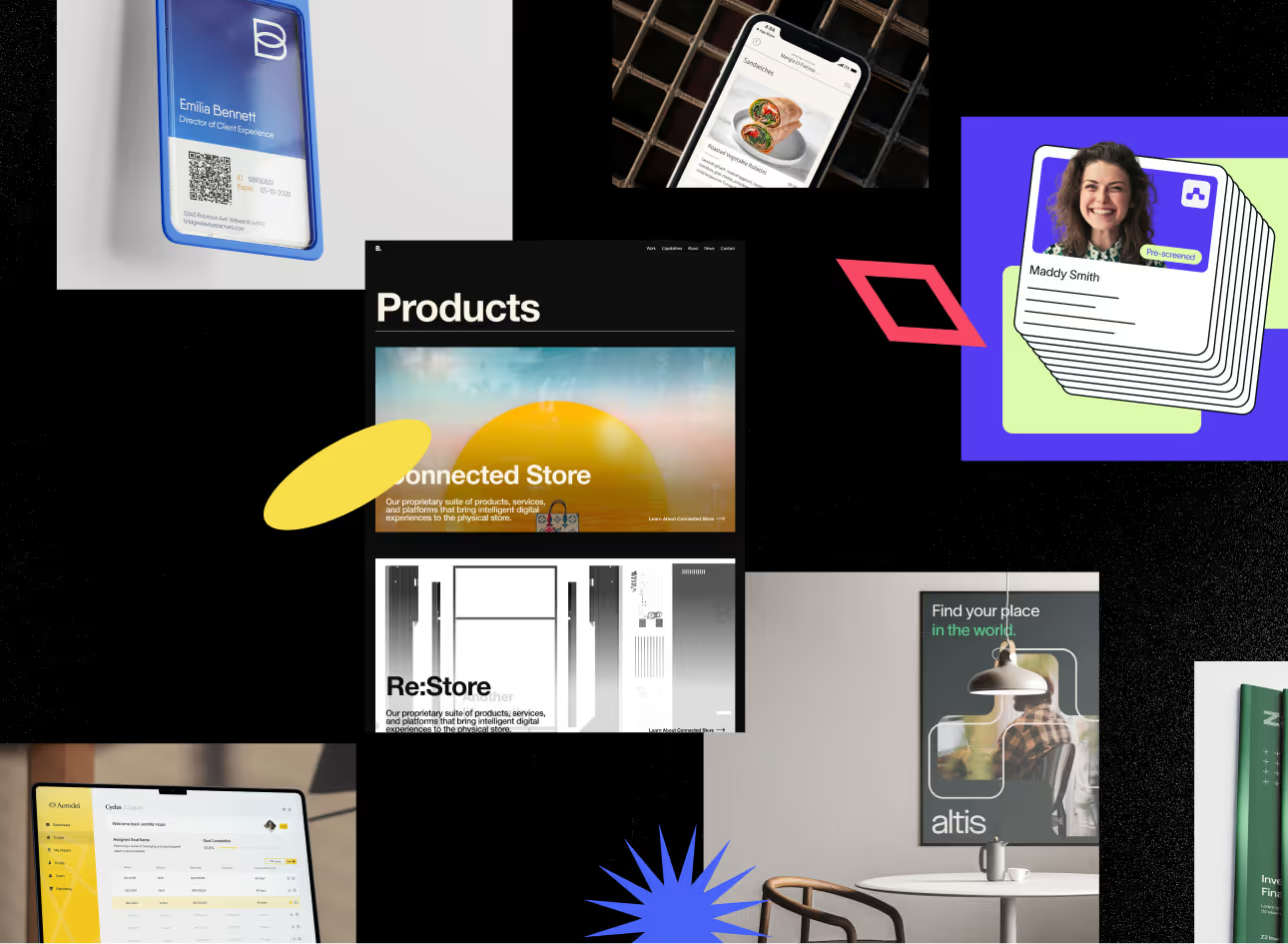
If you're heading into a raise and unsure which version of this you need, we do this work for funded tech companies at exactly these moments. Have a look at how we approach branding, or get in touch and we'll tell you honestly whether you need the full program or just a sharper set of words.




.svg)