Partywave is an Official Webflow Professional Partner

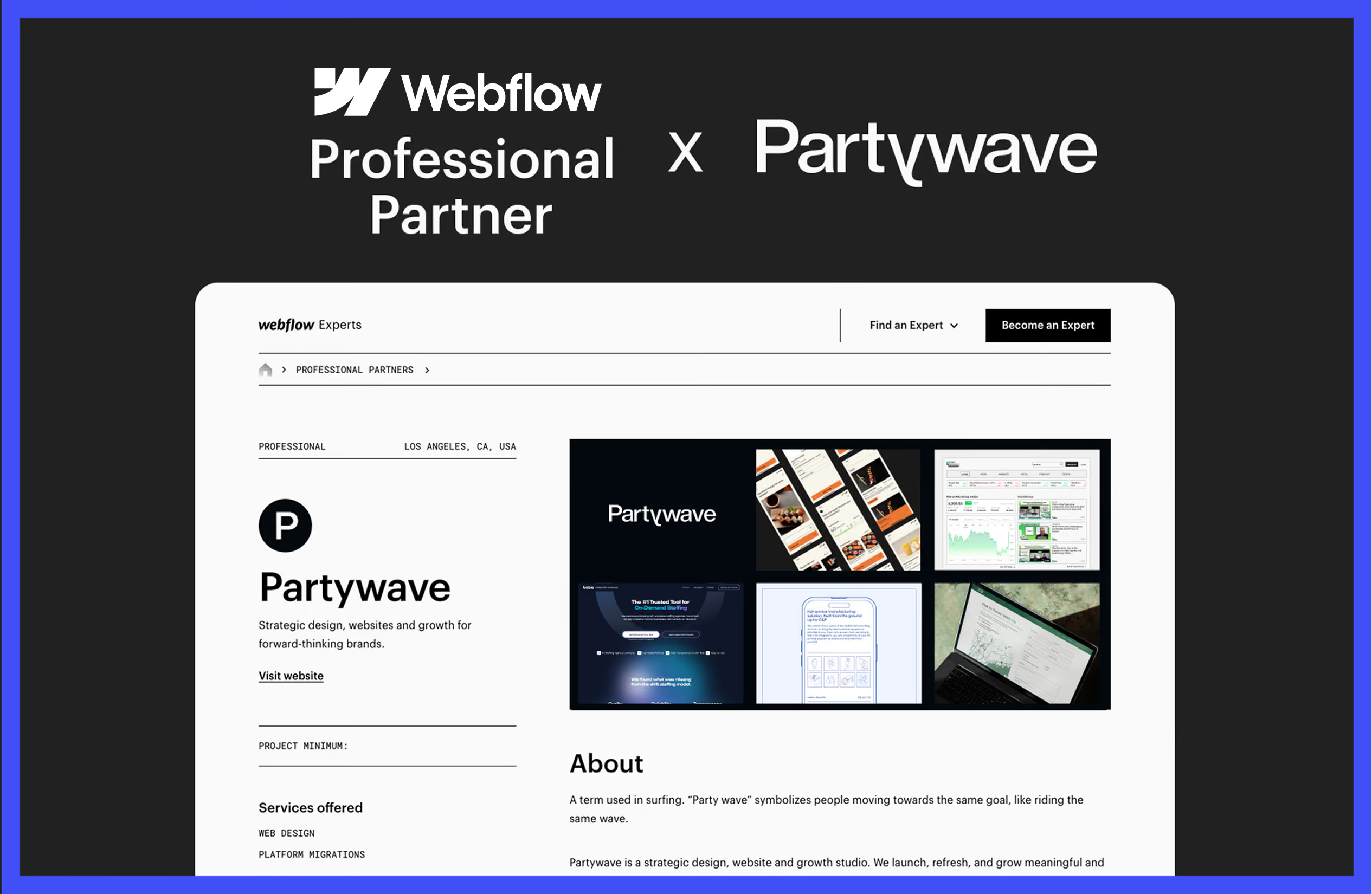

We are excited to announce that Partywave is an official Webflow Professional Partner. Our agency now joins a list of fewer than 100 agencies, studios, and professionals in the United States.
What is Webflow?
Webflow is a cloud-based CMS and web publishing system of the future. Webflow is suitable for most informational website builds because of its reliability and ease of use for maintenance.
Webflow allows you to create professional, customized websites on a visual canvas, complete with sleek animations and lightning-fast load speeds. At Partywave, it’s our platform of choice. You can read about why we prefer it over WordPress in our article here.
What is Webflow Professional Partner?
A Webflow Professional Partner is a freelancer, studio, or agency that has been certified and accredited as a reliable, professional Webflow Expert by Webflow. To become a Webflow Expert and Professional Partner, you must apply as an agency, pass a series of tests, and share several top-quality Webflow client websites to be graded by Webflow.
Ready to move on from your old website? Hit the contact in our menu.